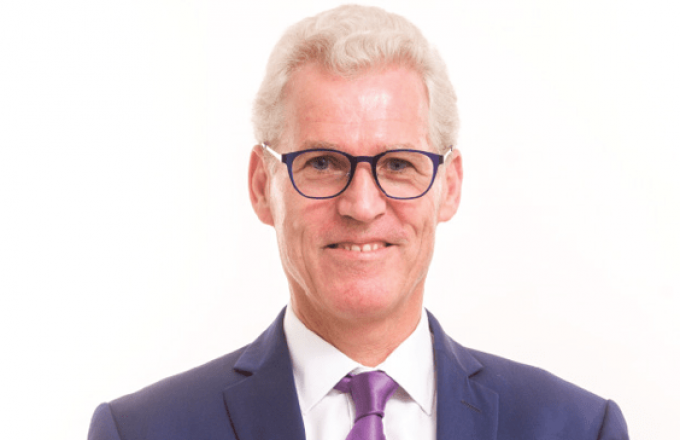
Heidmar’s CEO Pankaj Khanna sat down with Bloomberg Intelligence’s Talking Transports podcast to share his view on current market conditions. He noted that freight has climbed from 3-5% of oil’s delivered cost to somewhere near 25-30%, and that the numbers hold while three war zones stay open.
You can listen to the full episode here:

A VLCC was fixed to carry crude from the US Gulf to China for $82 million, Heidmar Chief Executive Officer Pankaj Khanna reported on Bloomberg Intelligence’s Talking Transports podcast, and a newbuilding VLCC ordered at a Chinese yard today costs $125 million to $130 million. One voyage, in other words, now earns about two-thirds of what the ship costs to build.
“These numbers are unbelievable,” Mr. Khanna told host Lee Klaskow. The $82 million fixture did not arrive alone. Brazil to China went at $65 million the previous week, a level Mr. Khanna said he had never seen in his life. Then $78 million was done. Then the US Gulf voyage at $82 million.
VLCC earnings tell the same story but from a different angle. A ship fixed on the day before the war broke out at the end of February was earning around $200,000 a day. Within a day that moved to $550,000, then $600,000, then $700,000. Today it stands at almost $2 million.
Freight as a share of the barrel
The shift behind those figures is what freight now represents in the delivered price of oil. It used to run at 3-5% and is now approaching 25-30%. Mr. Khanna’s view is that the oil market cannot hold where it is, and that the strain already shows in inflation. In the first five months, the loss of 20 million barrels a day was absorbed by record-high stocks released by China, the United States, Japan and Europe. Those stocks are now at record lows, with US crude inventories at levels last seen in 1980 and Japanese and European stocks drawn down.
He pointed to Aramco and Vitol, both of which said in the past week that without 13-14 million barrels a day coming out of the Middle East, oil would be at $200 instead of the $103 to $105 where it sits. He believes that freight at a quarter to a third of delivered cost is sustainable because energy is not optional. Everything in a room has moved on a ship that burned oil to get there.
“Without energy, we cannot survive.”
What would break it is peace. If oil prices collapse because the war ends, freight comes down in proportion. He does not expect that within six months, especially with Q4 and Q1 seasonal demand running through the winter.
Three war zones, and who is working in them
Mr. Khanna is blunt about the cost of keeping the oil moving, and he has good reason to, having experienced it first-hand. He went to sea as a cadet almost 40 years ago, spent seven years on board, and served through the first Gulf War in 1990 and 1991.
One Heidmar VLCC completed discharge in the Gulf on March 1, then sat trapped for four months. “It was quite tough for the people on board, but they stayed.” The casualty figures he gave have had little public attention, as 25 seafarers have died in the Persian Gulf conflict, more than 60 in the Black Sea. Eleven vessels were hit in the Middle East Gulf in the ten days before the recording, leaving several seafarers injured, and two more ships were hit in the Black Sea.
Three war zones are now open at once: the Middle East Gulf and the Strait of Hormuz, the Bab el-Mandeb and the Red Sea, and the Black Sea. More ships have been hit in the Ukraine-Russia conflict than at Hormuz, and Mr. Khanna was insistent that the Black Sea remains a critical oil loading area.
Heidmar has mostly stayed out of the Gulf. “The rates outside have been high enough that we did not need to take that risk,” though the company has transited the Bab el-Mandeb and loaded at Yanbu. What has changed, is not shipping’s importance but the recognition of it. Shipping was always strategic, but over the last eight months that understanding has traveled up the chain.
Crude over products
Crude and product markets move in the same direction without matching at the peaks, and crude has always earned more. The gap now is about cargo availability.
Product supply has contracted, and according to Mr. Khanna, Chinese refiners halted exports for four to five months. Middle East product exports, 4 million barrels a day, stopped altogether. The United States has weighed banning diesel exports of 2 million barrels a day. Russian diesel exports have stopped with refineries bombed out.
Crude has fared far better. Producers outside the Middle East have maximized output, stocks have been released, and 13-14 million barrels a day still find their way out of the Middle East and the Red Sea in any given week. Product voyages run longer, but the volume loss is far greater on that side.
The shadow fleet
Ships of 15-18 years old were sold into the shadow fleet from the start of the Russia-Ukraine war in 2022, including vessels out of Heidmar’s own pools. Nearly five years on, that fleet averages 20 years and includes ships aged 23, 24 and 25. It is also large where it matters, as 20% of the Aframax fleet sits in it, as well as 10-15% of the Suezmaxes, with some MRs and some VLCCs.
Russia has historically refused tonnage over 15 years at its terminals, its own Sovcomflot fleet being young, and its Baltic and Black Sea ports are difficult, facing an ice season and heavy traffic. Should Russia return to that standard, a fifth of the Aframax fleet leaves the market, and Mr. Khanna expects those ships to be scrapped. Add the National Iranian Tanker Company fleet, all of it sanctioned and old, where perhaps 30 tankers coming out would be substantial in the VLCC segment.
“The removal of the shadow fleet from the market will keep rates high for an elevated period of time.”
An orderbook with no cargo pumps
The counterweight is the orderbook, as 33% of the VLCC fleet is on order, meaning roughly 330 ships against a fleet of about 1,000, with Suezmaxes at 30%. The supply chain, though, sets the pace. Order a cargo pump today and the earliest delivery is 2030. Main engines are not available either. Yards are full to 2029 and filling into 2030, with the existing orderbook delivering across 2027, 2028 and 2029.
Mr. Khanna reiterated that the Ukraine-Russia war cannot run forever, and he expects movement within six to 12 months. Sanctions on the oil trade come off first, the 21-24-year-old ships go, and the newbuildings arrive into a fleet that has gotten rid of its oldest tonnage.
China, and the end of 90% dependence
China imported close to 12 million barrels a day before the war. Last month it took under 7 million, meeting the balance from stocks built the previous year. Underlying demand is drifting down by half a million barrels a day, from trucking fleets converting to LNG and LPG, and electrification of the car fleet. More than half of new car sales in Shanghai are now electric. Import figures lag that, since China also refines for export into markets like Australia, which has almost no refineries, and Indonesia. The bigger structural point concerns dependence. Before the Middle East war, Japan took 90% of its oil from the region, Korea 70%, China 60-65% and India 60%.
“If I was the CEO of a company which was importing 90% of its crude oil needs from one source, I would be fired,” he noted. Diversification means longer voyages, and the new barrels sit in the Atlantic Basin: Guyana, Brazil, Argentina and the US Gulf, all increasing production. Asked if that lifts ton-miles, his answer was that it absolutely does.
Why 15 years became the line
Tankers run about 25 years and are scrapped at 23-25. The oil majors, Total, Chevron, Exxon and BP, along with the Chinese majors, historically declined ships over 15 years old, with case-by-case treatment to 20 and a hard no above that for 90% of the market. That said, market tightness has forced some relaxation.
The reason was mainly environmental. Breakdowns, collisions and pollution come from human and mechanical failure, and while the industry has reduced the human component, machinery fails as ships age. A steering gear or engine failure close to shore is how a vessel goes aground. Fuel has since joined the argument: a VLCC built in 2010 running at 13 knots burns 80 tonnes a day, while one delivering in 2027 burns 45 to 50.
The model behind the margins
Heidmar began in tanker pools more than 40 years ago, where similar ships are aggregated and earnings distributed. Owners wanted more flexibility than a pool allows, with its minimum periods, working capital and notice requirements, so Heidmar added commercial management, acting as an extended commercial desk where owners get to keep a hand in how their ship is fixed.
In 2022 Mr. Khanna added what he calls boutique technical management, positioned against managers running 500-700 ships. “I came from 30 years of ship owning background. I am now providing that service to them where I manage their ships like they would manage it,” he explained. That means crews of 22 per vessel, safety management systems, the ERP, satellite communications and the handling of spares and stores, with the owner paying for those items directly.
The two feed each other. Technical brings commercial, and commercial brings technical. Commercial management and pools earn a fixed dollar amount per day plus 1.25% of gross freight, and on an $82 million fixture that comes to about $1 million. Technical management earns $300-500 per vessel per day. “Technical management is lower margin, but bigger volume and sticky business. Commercial management is way higher margin, but there’s a lot of volatility depending on the market.”
For investors, Heidmar offers the full cycle: identifying the investment, acquiring and financing the asset, running it technically, providing employment and eventually selling it. Growth has come both ways. Technical management went from zero to 20 vessels through two small acquisitions. Commercial growth has been organic, drawing owners out of pools, taking on existing clients’ expanding fleets, and picking up dry bulk owners who have bought tankers and want someone else to run them. Clients include large Greek owners, Turkish and Chinese owners, and one owner whose entire six-tanker fleet is under management. US tanker ownership, he noted, has fallen sharply. The sales cycle is short. Owners come a week or two before delivery, since VLCCs fixing in early October are working on November dates. Pool entry for a VLCC usually carries a one-year minimum.
Dry bulk is the expansion, specifically Capesize, Kamsarmax and Ultramax, where he sees room to add value. In containers Heidmar would provide ships to the liners instead of becoming one, setting up investments and chartering vessels to MSC, CMA CGM or Maersk. Chemicals he rules out, as the stainless-steel segment is already consolidated.
Seven ships becoming fifteen
Heidmar went digital 20 years ago, adopting an in-house ERP, and the AI work now sits inside that system instead of on top of it. A second system reads how the company works, including an agent called Stevie trained on both structured and unstructured data, the ERP and the emails. Automation is the next step, and the test case is terminal clearance. An operator currently spends 3-4 hours gathering documents, writing the email and filling in forms. The agent will assemble the whole thing, leaving the operator to review and send. Capacity is the number that matters. One operator handling 7 ships moves to 10, and perhaps 15 within 2 years.
However, Mr. Khanna was firm that this is not a headcount story. Repetitive work goes to the digital agent, and operators focus on margins, agency fees and port-call efficiency, which is where the money is made. At sea the same pattern applies, from paper charts to digital, then AI handling forms, reports and inventories, with navigation assistance following. Heidmar hopes to become fully digitalized within the next two years.
Capital Link – Disclaimer
Capital Link’s webinars, podcasts, articles and presentations may contain “forward-looking statements.” Statements that are predictive in nature, that depend upon or refer to future events or conditions, or that include words such as “expects,” “anticipates,” “intends,” “plans,” “believes,” “estimates,” “projects,” “forecasts,” “may,” “will,” “should” and similar expressions are forward-looking statements. These statements are not historical facts but instead represent only the beliefs of each participating Company regarding future results, many of which, in their nature, are inherently uncertain and outside of the control of the Companies. Actual results may differ, possibly materially, from those anticipated in these forward-looking statements. For more information about risks and uncertainties associated with the participating companies, please refer to the regulatory filings of each participating Company with the SEC or other Stock Exchanges where they are listed.
Founded in 1995, Capital Link provides Investor & Public Relations and Media services to several listed and private companies, including companies featured in these webinars, podcasts, articles and presentations. All these, including the one mentioned above, are for informational and educational purposes and should not be relied upon. They do not constitute an offer to buy or sell securities or investment advice or advice of any kind. The views expressed are not those of Capital Link, which bears no responsibility for them. In addition, Capital Link organizes a series of industry and investment conferences annually in key industry centers in the United States, Europe, and Asia, all of which are known for combining rich educational and informational content with unique marketing and networking opportunities. Capital Link is a data partner of the Baltic Exchange. Based in New York City, Capital Link has presence in London, Athens & Oslo. For additional information please visit: www.capitallink.com