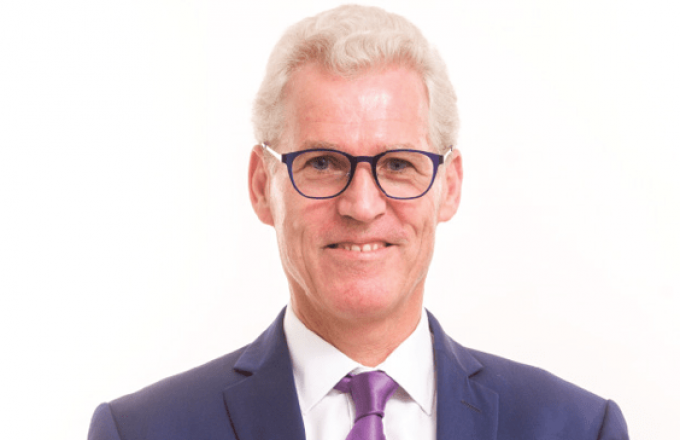
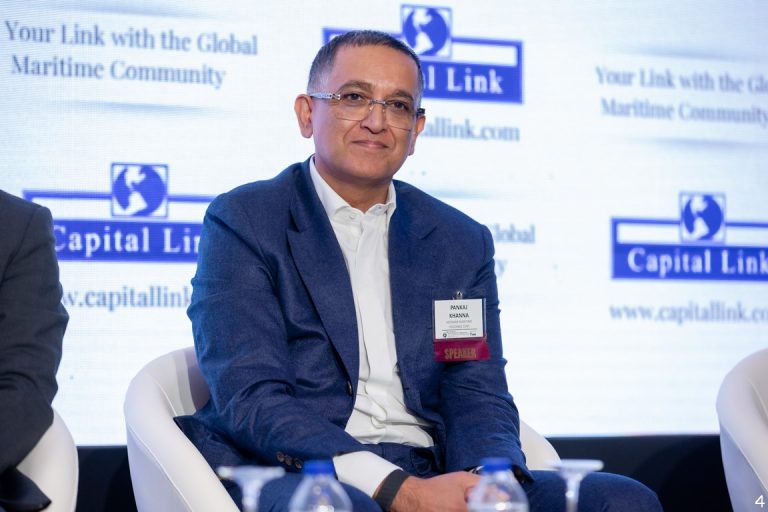
In this Deep Dive series episode, Nicolas Bornozis, President of Capital Link is joined by the senior management team of Capital Clean Energy Carriers Corp. , Mr. Brian Gallagher , EVP of Investor Relations, Mr. Nikos Tripodakis , Chief Commercial Officer and Mr. Jack Neilan , Head of LPG Commercial, to discuss the Company’s long-term strategy, investment program, commercial and chartering approach, financing strategy, and the structural trends shaping the LNG, LPG and liquid CO₂ shipping markets.
Watch the full discussion:
Becoming the Reference Owner in Gas Transportation
Two years ago, the Company was a Nasdaq-listed MLP with a mixed fleet and a legacy containership business. Since then, it has undergone a significant transformation – renaming itself, refinancing, converting to a corporation in August 2024 and gradually exiting its containership exposure. Just one container vessel remains, chartered through 2033 with an option extending to 2039. The 14 that divested generated $814.3million in proceeds, which have been redeployed into gas transportation assets.
Today, twenty high-specification vessels are on the water, including 15 latest-generation dual-fuel 174,000-cbm LNG carriers. Fully delivered, the fleet will comprise 21 LNG carriers, 6 medium gas carriers and 4 liquefied CO2carriers, with an average age below 3 years.
CCEC vision is simple: wants to be the reference owner of the gas transportation vessels that leads the energy transition — a core of LNG today, LPG, Ammonia alongside liquid CO₂ and LNG bunkering as each those markets scale.

The opportunity is particularly compelling on longer-haul gas trades. Mr. Gallagher began by highlighting the structural inefficiency of the longer Atlantic-to-Far East trade. Historically, moving one million tons of LNG has required roughly 1.5 carriers; on the US-to-Far East route, that figure rises to three. In other words, the same volume of LNG requires twice as many ships.

That shift is where the demand case lies. The United States is expected to add 145m – 160m tons of liquefaction capacity over the next decade, lifting US capacity above 255m tons a year by the end of 2031 and global capacity toward 900m tons by the early 2030s. On the company’s numbers, the US to Asia trade alone calls for another 220 – 300 LNG carriers between 2025 and 2035, with a further of 250- 330 vessels needed for fleet replacement.

Poten & Partners estimates 157m tons of US LNG capacity will reach with final investment approval before 2031, alongside a further 116m tons elsewhere. Applying Poten’s multiplier to those 273m tons implies demand for 444 new LNG carriers, versus 284 currently under construction in the Clarksons database.
An independent assessment points to a similar conclusion, GTT, the French containment systems engineer, raised its guidance with its Q2 results on 29 July, estimating demand for 550 new LNG carriers required between 2026 and 2035, up 22% from its previous estimate of 450.

The Steam Problem
The second leg of the case is fleet renewal, where the economics are striking. A modern two-stroke carrier burns $14,000 a day of fuel on a US to Europe trip, versus $63,000 for a steam-turbine vessel About a third of today’s LNG fleet is aging into obsolescence on size, age and efficiency, mostly steam-powered.

That gap produced a record year for LNG carrier scrapping in 2025. The company expects 80 to 100 steamships to exit the fleet over the next three to five years, with cumulative scrapping above 160 vessels by 2031. Mr. Gallagher’s point was that no other mainstream shipping segment has such a pronounced technology and age differential of this size.
What it Costs, What it Becomes
The program totals to approximately $3bn, of which $1.7bn remains to be paid through the first quarter of 2029. The shape of the transition is cleaner in vessel counts. In the first quarter of 2026, the gas fleet comprised12 LNG carriers and one liquefied CO2 carrier. By the end of the first quarter of 2027, that will rise to 18 LNG carriers and 10 medium gas and CO2 carriers in operation, with three additional LNG carriers still to be delivered. Leverage peaks over the next two or three quarters before beginning to amortize, capturing the transition investors are funding.
Fix Well, not Early
Supply and demand points to an inflection in 2028, when vessel demand outpaces newbuilding deliveries. Net fleet additions reach 292 vessels in 2029 before scrapping pulls back. On the demand side, FID committed liquefaction calls for 706 vessels by 2031, against net additions near 255. Last year’s disruption shifted the timing by months and left the direction alone.

The book below is 21 LNG carriers delivered and on order, with $2.8bn of contracted LNG backlog at an average firm duration of 6.5 years, rising to $4.1bn and 9.4 years including options. Fleet-wide, firm contracted revenue is $2.9bn and above $4.3bn if every option is exercised, with cover running to 2037 and options extending to 2043.

Five newbuilding positions in 2028 and 2029 are open, and management intends to keep them that way for now. When the US- Iran war broke out, the company moved in the opposite direction, working with the yard to bring three LNG carriers forward into a strengthening market. Archimidis and Agamemnon were delivered in June onto bridging charters through June 2027, after which CCEC holds the option to start previously agreed five and seven-year charters, each with a further five-year option. Alcaios I went onto an 18-month index-linked charter tied to the Atlantic two-stroke spot market, with no floor and no ceiling.
The shorter duration on that last charter was a scheduling decision. CCEC has no newbuilding deliveries in the first half of 2028, so the charter fills the gap and keeps a position opening in almost every quarter through to the second quarter of 2029. As Mr. Tripodakis noted, the company “would rather fix well than fix early.”
Partnerships With a Test Attached
Two deals show where the company is prepared to share economics. In April, it agreed to sell 49% of the 2023-built Amore Mio I into a joint venture at a vessel valuation of $230m, retaining 51% and management control. It also secured a ten-year time charter with BGN INT DMCC, with two three-year extension options. Exercised in full, the charter runs to 2043 and could generate up to $485.6m of revenue. It monetizes part of the ship, fixes a decade of employment on a position that was commercially challenging before the war, and brings one of the world’s largest LPG traders in as a co-investor as it expands into LNG.
The CMA CGM joint venture addresses a different issue. LNG bunkering grows mechanically with the dual-fuel fleet, but the end user base is a handful of super majors and specialists. A 50/50 structure on a 20,000-cbm bunkering vessel, due for delivery in the third quarter of 2028, secures demand from the outset.
“Does the partner de-risk the cash flow or open a new opportunity?” Mr. Tripodakis asked. When the answer is yes, the company will share the economics.
Earning on LPG, Waiting on CO2
Mr. Neilan set out the second pillar as a single investment case with two markets. The program consists of 10 vessels and 348,000 cbm, 6 dual-fuel medium gas carriers and 4 handy 22,000-cbm liquefied CO2 multi-gas carriers, with deliveries scheduled each quarter from January 2026 through July 2027. Four are on the water, Active, Amadeus, Aristogenis and Aridaios, and four are contracted.

Every vessel earns from day one on LPG and ammonia economics. The MGCs burn LPG, are ammonia-ready, offer a fuel cost advantage of 10% to 20% over conventional tonnage and meet IMO CII requirements without retrofits into the late 2020s. The CO2 carriers do the same and add flexibility to shift into liquid CO2 when the market develops.
Chartering follows the segment. Medium gas carriers trade on 6–12-month periods, so Aristogenis went straight onto a 12-month charter from the yard while Aridaios trades spot, and Amadeus took a voyage charter ahead of 12 months on time charter. Average firm duration for the LPG and multi-gas fleet is 0.9 years, by design. Handy one-year rates were assessed at $32,000 per day at quarter end, and for conventional 40,000-cbm MGCs $36,000, with prompt spot earnings for the largest classes reported above $60,000 at points.
On carbon, Mr. Neilan disclosed that the company is” early by design.” Six liquefied CO2 vessels currently exist worldwide, four of them in food and beverage service. DNV estimates demand at roughly 55 ships by 2030 and 700 by 2050. Meaningful volumes now look like a 2029 and 2030 story, while the vessels can trade LPG, ammonia and petrochemicals until then. The option costs nothing to hold.

Five Sources, Not One
Total assets stand at $4.66bn, shareholders’ equity at $1.55bn and cash at $268.9m, including restricted cash, with net leverage of 54.1% against the fair market value of the fleet.
Funding runs through bank debt, Japanese leasing, leasing structures, unsecured bonds and asset monetization. In February, the Company issued a €250m, 7-year unsecured bond on the Athens Exchange with a 3.75% coupon; part of the proceeds repaid the €150m 2021 bond carrying a 4.4% coupon. Archimidis and Agamemnon each have 8-year JOLCO facilities of $216m, while the MGCs Aristogenis and Aridaios, each have 7-year sale and leasebacks of $54.7m. Alcaios I have raised $170m through refinancing of two existing facilities over 10 years.
With $1.7 bn of capex remaining, the company considers itself fully funded based on 70% debt financing for vessels without financing in place, excluding internally generated cash and with cash expected to be returned to the company. Second quarter zero cost collars on $800m of floating rate debt, with a 3-year tenor, a weighted average floor of 3.68% and a cap of 4.31%, leave about half of total debt fixed or protected.
The Payout Has Room to Grow
The dividend has been paid every quarter since the 2007 IPO, 77 consecutive quarters, through the 2008 financial crisis, through COVID and the current war. In April, the Board authorized a $20m repurchase program with 99,411 shares bought at an average of $21.54 and retired. With the shares trading below net asset value, Mr. Gallagher’s view is that buying the company’s own tonnage at a discount is a rational use of capital.
The guidance on distributions stands. By the end of this year or early next, with greater visibility on employment for the LNG carriers delivering in the first quarter of 2027, the Board expects to be in a position to be more constructive.
Asked what investors should watch, Mr. Gallagher highlighted four things: the backlog and the counterparties behind it; a fleet averaging under three years old with no special survey due after this August until 2028; a fully funded balance sheet at moderate leverage, and the distance between a market capitalization of $1.4bn on 60.3m shares and what a fleet of this quality is worth.
About Capital Clean Energy Carriers Corp.
Capital Clean Energy Carriers Corp. (NASDAQ: CCEC), an international shipping company, is a leading platform of gas carriage solutions with a focus on energy transition. CCEC’s in-the-water fleet includes 20 high specification vessels, including 15 latest generation LNG/Cs, one legacy Neo-Panamax container vessel, two dual-fuel medium gas carriers (“MG/Cs”) and two Handy Liquefied CO2 Multi-Gas Carriers (“HMG/Cs”). In addition, CCEC’s under-construction fleet includes six additional latest generation LNG/Cs, four MG/Cs, two HMG/Cs and one LNG dual-fuel Bunkering vessel to be delivered between the third quarter of 2026 and the first quarter of 2029. For more information about the Company, please visit: www.capitalcleanenergycarriers.com
Capital Link – Disclaimer
Capital Link’s webinars, podcasts, articles and presentations may contain “forward-looking statements.” Statements that are predictive in nature, that depend upon or refer to future events or conditions, or that include words such as “expects,” “anticipates,” “intends,” “plans,” “believes,” “estimates,” “projects,” “forecasts,” “may,” “will,” “should” and similar expressions are forward-looking statements. These statements are not historical facts but instead represent only the beliefs of each participating Company regarding future results, many of which, in their nature, are inherently uncertain and outside of the control of the Companies. Actual results may differ, possibly materially, from those anticipated in these forward-looking statements. For more information about risks and uncertainties associated with the participating companies, please refer to the regulatory filings of each participating company with the SEC or other Stock Exchanges where they are listed.
Founded in 1995, Capital Link provides Investor & Public Relations and Media services to several listed and private companies, including companies featured in these webinars, podcasts, articles and presentations. All these, including the one mentioned above, are for informational and educational purposes and should not be relied upon. They do not constitute an offer to buy or sell securities or investment advice or advice of any kind. The views expressed are not those of Capital Link, which bears no responsibility for them. In addition, Capital Link organizes a series of industry and investment conferences annually in key industry centers in the United States, Europe, and Asia, all of which are known for combining rich educational and informational content with unique marketing and networking opportunities. Capital Link is a data partner of the Baltic Exchange. Based in New York City, Capital Link has presence in London, Athens & Oslo. For additional information please visit: www.capitallink.com.