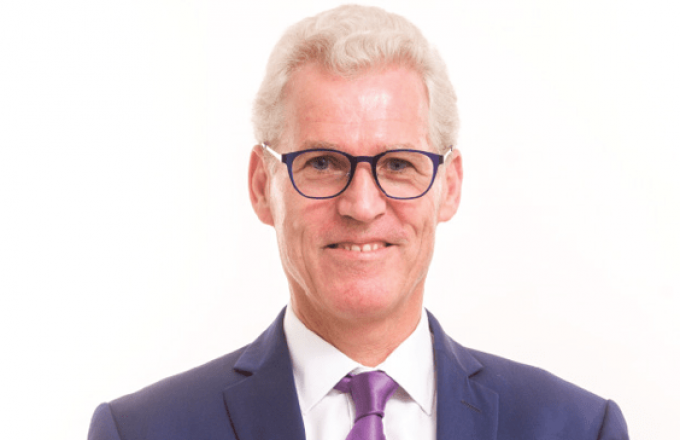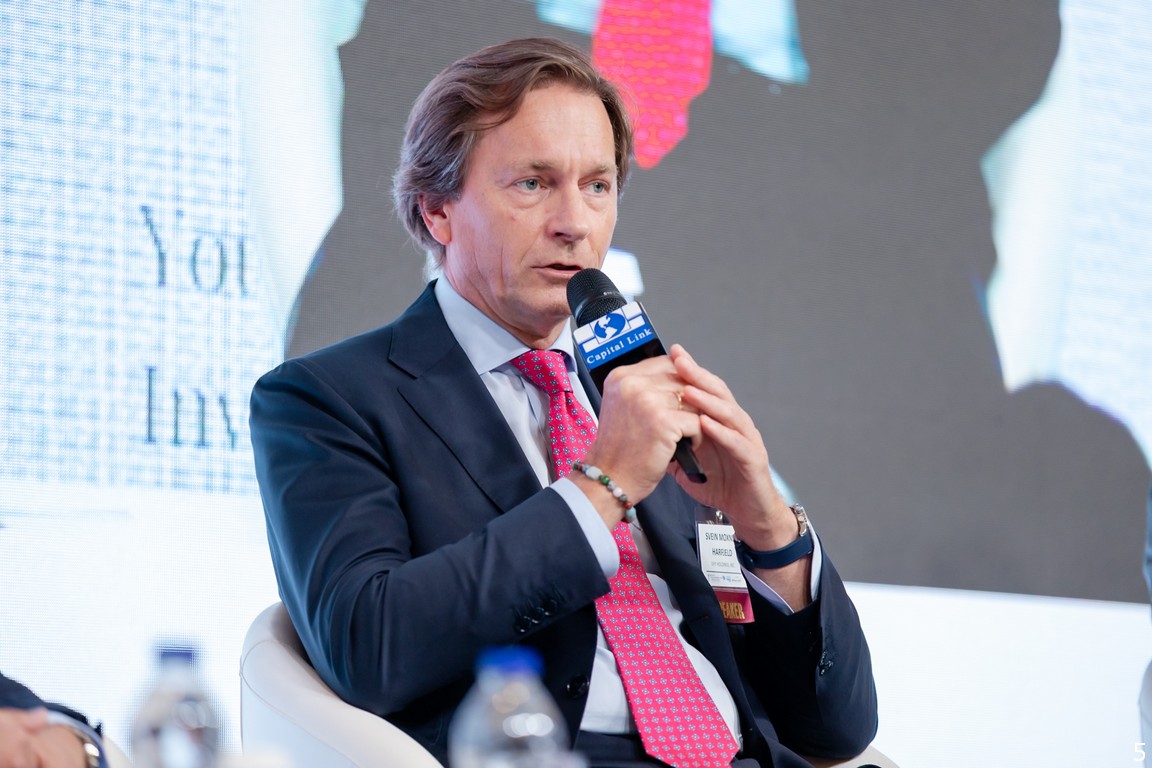
In this episode of Capital Link’s Spotlight Podcast Series, DHT Holdings, Inc. (NYSE: DHT) President & Chief Executive Officer, Mr. Svein Moxnes Harfjeld explains how the crude tanker market has entered a different phase, supported by years of underinvestment in new tonnage and a fleet that is becoming old and limited.
According to Mr. Harfjeld, the strength seen in tanker markets over the past year was not only caused by the geopolitical disruptions, but by structural changes that had years in the making. “We saw this really play into force last fall when the markets started to strengthen significantly without any particular geopolitical events driving this improvement,” he said.
For years, uncertainty over future fuel technologies, environmental regulations and the prospect of peak oil demand discouraged owners from ordering ships. The result is a fleet that has grown far more slowly than many expected.
That caution has left the industry with limited fleet growth at a time when oil moves across changing trade routes due to a string of disruptions. For owners of VLCCs, the dynamic has created a supportive backdrop. DHT, which operates a fleet exclusively on the VLCC segment, has been among the beneficiaries.
The full webcast can be viewed here:
Shadow Fleet: Safety and Regulatory Concerns
During the discussion, Mr. Harfjeld expressed concern about the ever growing presence of the shadow fleet, and what he views as insufficient regulatory oversight.
“What I’m a bit saddened about is that IMO is not stepping up efforts,” he warned. Further than that, he indicated that some flag administrations responsible for large tankers have limited experience and competence to enforce regulation of vessels of that scale. Some, he noted, historically dealt with smaller coastal fleets and fishing vessels not large ocean-going tankers.
The industry, he said, should be pushing for stricter oversight before a major incident, such as an oil spill, forces action. He called on the IMO to take a more active role in strengthening enforcement standards and ensuring that flag states possess the capabilities required to oversee large tanker operations.
Balance Sheets Matter More Than Ever
Asked what separates successful tanker companies from the rest, Mr. Harfjeld pointed first to financial discipline. Shipping companies already carry exposure to market swings through their operations, he said. Adding excessive debt only magnifies those risks.
“A tanker business has significant operational leverage. And I think, operational and financial leverage over time can be a very dangerous mix,” he commented.
For that reason, DHT has focused on a more conservative balance sheet and limiting financial leverage.
Mr. Harfjeld mentioned several privately owned Greek tanker companies as examples of businesses that have maintained conservative financial profiles, not being persuaded by strong markets.
“I see this in the private sector, especially in Greece, with many highly respected tanker companies. They have very strong balance sheets and are able to invest, react and survive through the cycles accordingly. The benefit from that is not only to have staying power through the cycles but also be able to react on business opportunities because you have the financial means to do it when you should do it.”
Fleet Growth Continues, But Asset Prices Are a Challenge
DHT entered the current upcycle with financial capacity and has already expanded its fleet. The company has taken delivery of four newbuild VLCCs this year and recently secured another vessel for delivery in early 2028.
However, Mr. Harfjeld suggested that deploying capital has become more difficult as asset values continue to rise. Second-hand tanker prices have climbed sharply, and owners are showing little interest in selling modern vessels as long as spot earnings remain attractive.
Although DHT remains interested in fleet growth, Mr. Harfjeld indicated that ordering vessels for delivery four years into the future is becoming less attractive. Instead, the company plans to keep its financial flexibility and focus on opportunities within its core VLCC segment.
Strait of Hormuz: the Market’s Biggest Variable
Mr. Harfjeld made it clear that one issue dominates the industry’s immediate outlook, the closure of the Strait of Hormuz. While declining to speculate on geopolitical outcomes, he stressed that prolonging this would have serious consequences for both energy markets and the global economy.
“The world’s two biggest economies, the United States and China, are both well aware of the potential damage an extended closure can do to their respective economies as well as the world economy,” he clarified.
He suggested that Washington and Beijing have a shared interest in preventing such a thing from happening.
Even though tanker rates typically benefit from disruptions and longer voyages, the CEO worries that an extended conflict would ultimately hurt shipping if it weakened economic growth.
Peak Oil Demand More Than a Decade Away
The longer-term question for tanker owners remains oil demand. Predictions of peak demand have circulated for years, but Mr. Harfjeld noted DHT’s research sees a more gradual transition than many forecasts suggest.
“We have engaged with the leading oil research firms in trying to develop a proper view on this,” he said, explaining that the company’s conclusion is that peak demand is still some distance away, maybe more than10 years. More importantly, he believes that even after demand reaches its peak, consumption is unlikely to collapse and will probably plateau out.
For tanker owners, that distinction matters due to the fact that a plateau still requires large volumes of crude to move between producers and consumers, supporting vessel demand well into the next decade.
Capital Link Editorial
Capital Link – Disclaimer
Capital Link’s webinars, podcasts, articles and presentations may contain “forward-looking statements.” Statements that are predictive in nature, that depend upon or refer to future events or conditions, or that include words such as “expects,” “anticipates,” “intends,” “plans,” “believes,” “estimates,” “projects,” “forecasts,” “may,” “will,” “should” and similar expressions are forward-looking statements. These statements are not historical facts but instead represent only the beliefs of each participating Company regarding future results, many of which, in their nature, are inherently uncertain and outside of the control of the Companies. Actual results may differ, possibly materially, from those anticipated in these forward-looking statements. For more information about risks and uncertainties associated with the participating companies, please refer to the regulatory filings of each participating company with the SEC or other Stock Exchanges where they are listed.
Founded in 1995, Capital Link provides Investor & Public Relations and Media services to several listed and private companies, including companies featured in these webinars, podcasts, articles and presentations. All these, including the one mentioned above, are for informational and educational purposes and should not be relied upon. They do not constitute an offer to buy or sell securities or investment advice or advice of any kind. The views expressed are not those of Capital Link, which bears no responsibility for them. In addition, Capital Link organizes a series of industry and investment conferences annually in key industry centers in the United States, Europe, and Asia, all of which are known for combining rich educational and informational content with unique marketing and networking opportunities. Capital Link is a data partner of the Baltic Exchange. Based in New York City, Capital Link has presence in London, Athens & Oslo. For additional information please visit: www.capitallink.com.