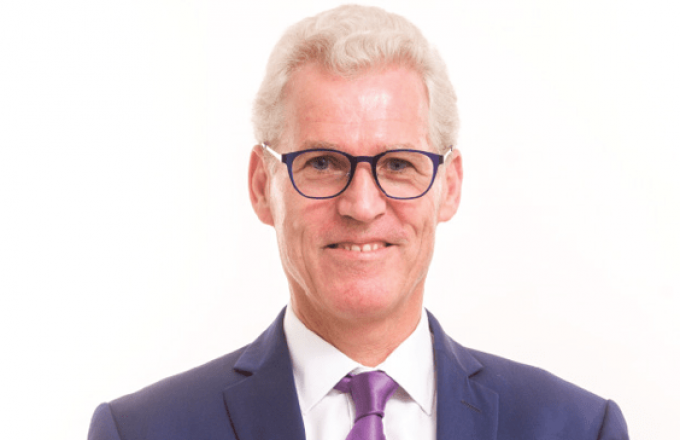
Hafnia’s former Hafnia CEO and Board Member in Riding the Waves of a Lifetime in Maritime Leadership & Legacy Podcast Series.
In this episode of Riding the Waves of a Lifetime in Maritime Leadership & Legacy Webinar Series, Capital Link welcomes the former Chief Executive Officer of Hafnia , Mr. Mikael Skov , who moved to the board of directors on September 1.
Mr. Skov spent 16 years with Hafnia, leading it from its establishment in 2010. He co-founded Hafnia Tankers, and before that spent 25 years at TORM, serving as Chief Executive Officer for two of them. His career in shipping has been more than 40 years.
Please click the following link to view the discussion:
Trust as a leadership tool
At first, Mr. Skov was studying languages and economics, and his mother, concerned that he had not settled in a direction, put a cutting from a newspaper in front of him describing the shipping industry. Her question was whether this was the thing he always talked about enjoying, commercial work, global trade, languages, different cultures. He agreed that it was.
What followed was methodical, as he took the Danish Yellow Pages and applied to every transportation company listed in it. A few conversations later he joined TORM as a trainee.
He has never planned a career as such, even after entering the industry. Ambition is worth having, he says, though it works best alongside staying in the moment. A long-term perspective held constantly in front of you carries a risk of disappointment, since the destination rarely arrives as quickly as expected.
The leadership lesson Mr. Skov returned to again and again came from his early years at TORM, working under the head of the commercial team who later became the company’s chief executive.
That lesson was trust. Showing people that you have faith in them, produces a more efficient organization, faster decisions, and a business better able to control costs and run well. He named building that trust within a leadership group as one of the fundamentals of the job.
The night Hafnia became a business
Founding Hafnia was a defining moment for him. Mr. Skov described the shift from a listed corporate environment, where he had left as a chief executive with the support structures that come with the role, to starting from scratch with two other people and nothing supporting them.
He counts that lack of a safety net as healthy. Building a company from nothing taught him respect for every function in a business, and for the people producing the work that a large organization takes for granted each day.
The defining moment came later, when the team had spent a long stretch working to combine three transactions at once, the acquisition of the Lauritzen fleet of secondhand product tankers, the acquisition of a fleet from Blackstone against shares, and an order for eight newbuildings at GSI in China, with a capital raise tying the package together. Keeping every party engaged long enough to close was the hard part.
Mr. Skov commented that this transition is what took the company from nothing to holding two fleets, eight vessels on order, fresh capital and a listing on the Oslo OTC. From that point onwards, “we had a real business.”
What changed after the crisis
Asked which industry changes surprised him most, Mr. Skov pointed to shipping’s tendency toward a shared view of what comes next. He described the ordering wave of the 2000s as a period when fundamentals were set aside and framed the pattern as both a strength and a weakness considering that money earned flows back into the industry until a consequence arrives and the cycle turns again.
The more constructive shift, he believes, followed the financial crisis. Early in his career the concept of shareholder value was not given the priority he believes it warrants, and listed companies were mostly management driven and oriented toward growth and recirculating capital. Investors from outside traditional shipping then entered the sector, and he credits them with strengthening the focus on shareholder value and capital allocation at Hafnia and elsewhere.
Preparing an organization for a different cargo
On the energy transition, Mr. Skov set out two paths available to any owner. One is to hold what you have and extract the maximum from it for a period. The other is to prepare the organization for change and look for the opportunities in it.
He highlighted that the main competence is arranging transportation, and it happens to be refined oil products at the moment. An organization comfortable with change and willing to adopt new technology can move toward ammonia, methanol or whatever the market requires without treating the shift as a threat.
He is of the opinion that change left unaddressed makes people anxious, and anxious people resign or make different choices. The question a company has to answer for its staff is whether it intends to sit out the cycle on product tankers or to take part in however energy transportation develops.
Scale, and where public markets fit
Mr. Skov noted that his views on public markets have softened over the years. Private ownership offers considerable flexibility and agility in changing direction, provided the company has sufficient size, and many private owners have performed strongly.
For listed companies he sees limited future for small and medium-sized public companies confined to a single trade. The case he makes is for larger companies with flexibility in their path, combining product tankers with LNG or LPG, which gives a longer runway.
Capital requirements support that view, as transforming a company toward any new energy carrier is expensive, and that expense demands scale. He recalled a period when an $1 billion market capitalization was large enough to support a New York listing, and put the bar considerably higher now, above where Hafnia itself stands today.
The story the industry has not told yet
Shipping reaches the headlines for the wrong reasons, in Mr. Skov’s assessment, for earning too much from a conflict, or for an incident aboard a vessel. The purpose he has drawn from four decades of work is helping the world run more efficiently by moving what is produced to where it is consumed.
Naturally, he traced part of the problem to fragmentation. Shipping is not one industry, and the container and tanker segments prefer different narratives. The decarbonization debate has widened that gap, since sectors with fixed trading patterns have had an easier route than those waiting to see when new fuels become available. No single entity exists to tell the collective story, which leaves individual companies to spread the message themselves. Hafnia, he acknowledged, could have done so more often.
What should never change
Asked what must remain constant, Mr. Skov was happy to share that will always be the people. There is no prototype for a good shipping person, and the industry has room for every kind of personality. The ability to build relationships between cultures and religions is a gift with particular value in this business.
He concluded that working in shipping and holding prejudices are incompatible, since the world is the workplace. He hopes the industry keeps its emphasis on relationships and does not let technology displace it.
Capital Link’s Riding the Waves of a Lifetime Series
The Maritime Leadership and Legacy Series – Celebrating the careers, leadership journeys, and lasting contributions of shipping’s most respected figures.
Exclusive Season Sponsor: White & Case
Tune in Every Tuesday and Thursday. For more information follow here:
Capital Link – Disclaimer
Capital Link’s webinars, podcasts, articles and presentations may contain “forward-looking statements.” Statements that are predictive in nature, that depend upon or refer to future events or conditions, or that include words such as “expects,” “anticipates,” “intends,” “plans,” “believes,” “estimates,” “projects,” “forecasts,” “may,” “will,” “should” and similar expressions are forward-looking statements. These statements are not historical facts but instead represent only the beliefs of each participating Company regarding future results, many of which, in their nature, are inherently uncertain and outside of the control of the Companies. Actual results may differ, possibly materially, from those anticipated in these forward-looking statements. For more information about risks and uncertainties associated with the participating companies, please refer to the regulatory filings of each participating Company with the SEC or other Stock Exchanges where they are listed.
Founded in 1995, Capital Link provides Investor & Public Relations and Media services to several listed and private companies, including companies featured in these webinars, podcasts, articles and presentations. All these, including the one mentioned above, are for informational and educational purposes and should not be relied upon. They do not constitute an offer to buy or sell securities or investment advice or advice of any kind. The views expressed are not those of Capital Link, which bears no responsibility for them. In addition, Capital Link organizes a series of industry and investment conferences annually in key industry centers in the United States, Europe, and Asia, all of which are known for combining rich educational and informational content with unique marketing and networking opportunities. Capital Link is a data partner of the Baltic Exchange. Based in New York City, Capital Link has presence in London, Athens & Oslo. For additional information please visit: www.capitallink.com.