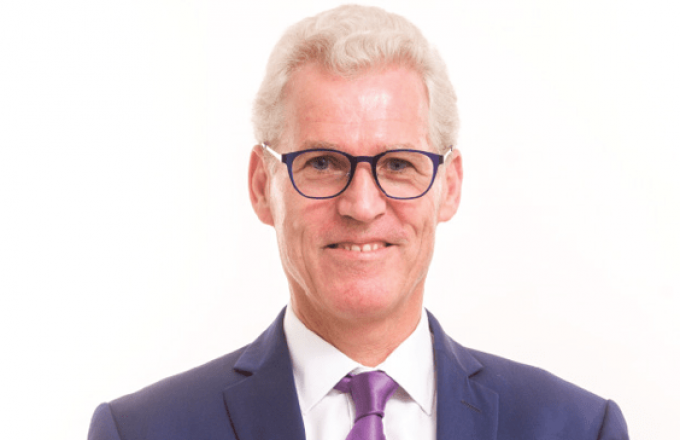
For years, shipowners worried about oversupply, freight cycles and fuel prices. Those concerns have not disappeared, but they no longer dominate boardroom discussions, according to PREMUDA chief executive Mr. Marco Fiori . Political risk has now taken their place.
Wars, sanctions and trade alliances have become part of everyday business, forcing owners to rethink investment decisions far more frequently than they did a decade ago. Markets can change within weeks, not years, making long-term planning more difficult even during profitable periods. In this episode of Capital Link’s Expert Talks series, Mr. Fiori sheds light on those viewpoints, sharing his stance on the current market.
Highlights
- The outlook for the tanker and dry cargo markets
- The impact of geopolitical developments on global shipping
- Decarbonization and investment decisions in an evolving regulatory landscape
- The role of private ownership and strategic flexibility
- Building resilience and creating long-term value in a rapidly changing industry
Please click the following link to view the discussion:
Every day there is something new
The Italian owner prepares for another chapter in its 119-year history. Premuda, founded in Trieste in 1907 when the city still belonged to the Austro-Hungarian Empire, emerged from years of financial restructuring in 2025 through a management buyout backed by long-time shareholder Pillarstone. Mr. Fiori now wants to expand the fleet again, though not at the pace seen during previous shipping booms.
“Sometimes you make a decision and twenty days later you realize the picture has already changed.”
His priority is building a company that can stay competitive through several market cycles, not making the most of the current one. That philosophy has shaped every decision taken since he arrived at Premuda in January 2019.
The company he inherited was much larger on paper, operating 25vessels. It also carried the scars of one of shipping’s most painful downturns. Like many owners, Premuda spent much of the previous decade dealing with heavy debt, weak earnings and falling asset values. Mr. Fiori’s first objective was considerably less ambitious than fleet growth.
“The first rule is to stabilize the patient”
Only after restoring financial stability did management begin thinking about expansion. Stronger freight markets helped, although Mr. Fiori credits much of the turnaround to patient financial partners who resisted the temptation to look for a quick exit. For example, Pillarstone remained involved long after a traditional private equity investor might have sold its stake. Japanese financial partners also continued backing new projects, giving Premuda access to long-term capital during a period when financing remained difficult for many owners.
The restructuring culminated in last year’s management buyout, leaving senior executives with an ownership stake in the business they had spent years rebuilding. For Mr. Fiori, the experience has created inevitable comparisons with his previous role at d’Amico, where he spent more than two decades helping build one of Italy’s largest publicly listed tanker operators. He admits he wondered whether lightning could strike twice, and it did, as Premuda’s fleet looks very different today.
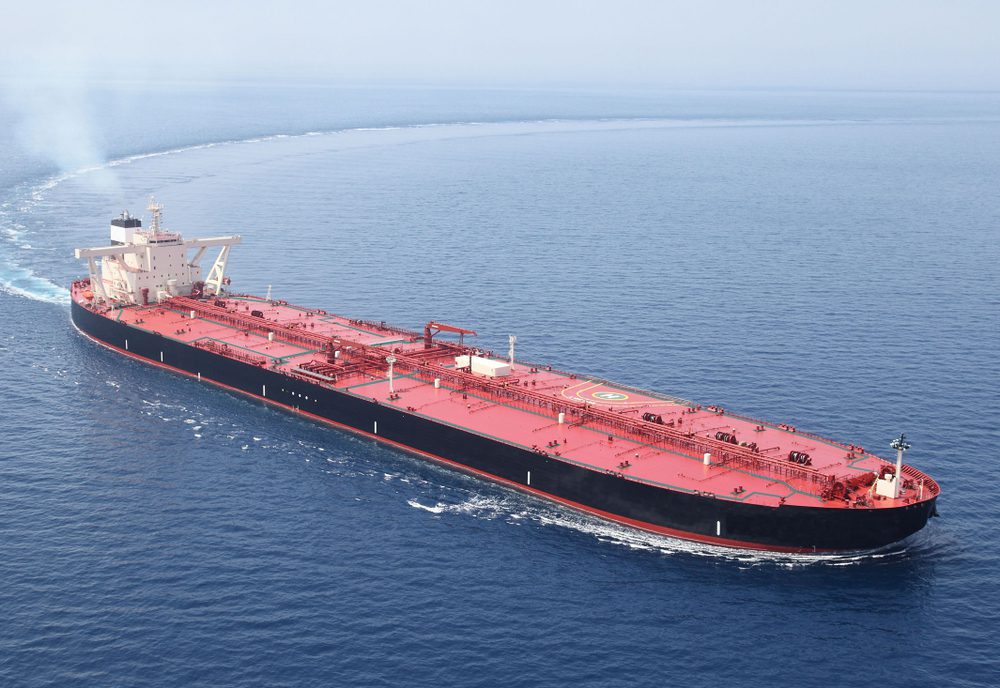
Older Handysize tankers have disappeared. The focus has shifted almost entirely to MR product tankers, supported by LR2s and a single Aframax employed on long-term business.
Age matters as much as numbers
Mr. Fiori has little interest in buying cheaper older vessels if they shorten the company’s commercial life. Modern ships consume less fuel, attract stronger charterers and remain competitive long after older designs begin struggling for employment.
“The main thing you have in shipping is speed and consumption,” he commented. His target is to build a fleet with an average age of 5 years, and that process is already under way. Premuda has ordered 2 MR product tankers at China’s Dingheng shipyard, with deliveries scheduled during 2029. Two additional options remain available. The company has also entered the Ultramax dry bulk market through a long-term arrangement with Japanese partners, combining charter commitments with purchase options that allow Premuda to increase its exposure over time.
Stopping well short of chasing size for its own sake
Mr. Fiori sees room for a fleet of 20 vessels, split between product tankers and Ultramax bulkers. He likes the Ultramax sector because of its flexibility. The ships can carry a wide range of cargoes and avoid becoming tied to one commodity. Tankers remain the company’s core business, although even there he has become selective.
Newbuilding prices climbing sharply
An LR2 now costs about $75m, making every investment decision harder than it was only a few years ago. Any order at those levels, in his view, needs secure employment capable of producing acceptable returns over many years.
That preference for discipline runs through much of Mr. Fiori’s market outlook. Shipping remains profitable, though he admits the industry has benefited from circumstances few people would have wished for.
The war in Ukraine reshaped tanker trades, sanctions created entirely new trading patterns, the shadow fleet grew into one of the defining features of oil transportation, fighting in the Red Sea forced ships away from the Suez Canal, and last but not least fresh tension around the Strait of Hormuz introduced another layer of uncertainty.
Taken individually, each event would have been significant, but combined, they have transformed tanker markets. “We never heard the term shadow fleet before,” Mr. Fiori disclosed. “Now everybody uses it.”
He also admits volatility has supported earnings. Freight markets generally perform better when trade flows become less predictable and ton mile demand grows. Yet he recognizes that shipping may be earning more money, but those profits have arrived during one of the most unstable political periods. Mr. Fiori worries less about where oil prices move next than about how long current geopolitical tensions continue.
Countries have relied heavily on strategic reserves to soften supply disruptions, he said. That cannot continue indefinitely, and his concern is not limited to shipping. He looks at financial markets and wonders why investors remain so confident when political uncertainty continues to grow. Europe faces renewed security concerns, NATO relationships have become more complicated, relations between major powers continue to change. None of those developments, he believes, resemble the relatively stable international system that allowed global trade to expand for decades.
For shipowners, that means that planning has become harder. Not because demand has disappeared, but because the assumptions supporting today’s investment decisions may no longer hold a few months from now.
About Premuda
PREMUDA is one of the oldest and most renowned brands within the worldwide shipping. Incorporated in Italy, with premises in the port city of Genova, we have active subsidiaries in Italy and Malta. As leading provider of dry cargo and tanker services globally, PREMUDA presently controls a fleet of 12 vessels and is capable to offer to clients and charterers a broad range of best in class transport solutions. Our main equity is PEOPLE. As such we care about them and we support meritocracy, diversity and inclusiveness. As a team we work together to discover new solutions and to set new standards within the sector in which we operate. We have extensive experience and a strong global network with all the key players of international shipping and finance community. The combination of PREMUDA team capabilities and the present investor base is a unique blend and provides an ideal platform to swiftly execute and manage investment opportunities from both financial and commercial perspective. Our team today comprises some 30 people ashore, plus around 250 seafarers on average, with usually more than 10 nationalities represented. For more information please visit here: www.premuda.net
Capital Link – Disclaimer
Capital Link’s webinars, podcasts, articles and presentations may contain “forward-looking statements.” Statements that are predictive in nature, that depend upon or refer to future events or conditions, or that include words such as “expects,” “anticipates,” “intends,” “plans,” “believes,” “estimates,” “projects,” “forecasts,” “may,” “will,” “should” and similar expressions are forward-looking statements. These statements are not historical facts but instead represent only the beliefs of each participating Company regarding future results, many of which, in their nature, are inherently uncertain and outside of the control of the Companies. Actual results may differ, possibly materially, from those anticipated in these forward-looking statements. For more information about risks and uncertainties associated with the participating companies, please refer to the regulatory filings of each participating company with the SEC or other Stock Exchanges where they are listed.
Founded in 1995, Capital Link provides Investor & Public Relations and Media services to several listed and private companies, including companies featured in these webinars, podcasts, articles and presentations. All these, including the one mentioned above, are for informational and educational purposes and should not be relied upon. They do not constitute an offer to buy or sell securities or investment advice or advice of any kind. The views expressed are not those of Capital Link, which bears no responsibility for them. In addition, Capital Link organizes a series of industry and investment conferences annually in key industry centers in the United States, Europe, and Asia, all of which are known for combining rich educational and informational content with unique marketing and networking opportunities. Capital Link is a data partner of the Baltic Exchange. Based in New York City, Capital Link has presence in London, Athens & Oslo. For additional information please visit: www.capitallink.com.